Key takeaways
- Network vaults are built by the customer to the utility's specification, so the scope sits in your contract, not the utility's.
- Bid sets often show only a space allocation for the vault. The real scope arrives later with the utility drawings.
- A contractor who has built many vaults can give budget pricing before those drawings exist, which protects your number.
If you bid large commercial or residential buildings in a dense utility territory, sooner or later the drawings will show a transformer vault. Often that is all they show: a rectangle labeled "utility vault, by others" or a space allocation with no detail. The trouble is that "others" is usually you.
Spot networks and isolated networks in plain terms
A network system feeds a building from several primary feeders at once. Each feeder supplies its own network transformer, and the transformers are tied together on the secondary side through network protectors. If a feeder faults, its protector opens on reverse power and the building stays energized from the others. That redundancy is why network systems are known as the most reliable form of power distribution.
A spot network serves one location from two or more transformers. Utilities use different names for the variations, and some, such as Con Edison, use the term isolated network for a network that serves a single building rather than tying into the street grid. The vault can sit under the sidewalk or inside the building footprint.
Why the vault is your scope
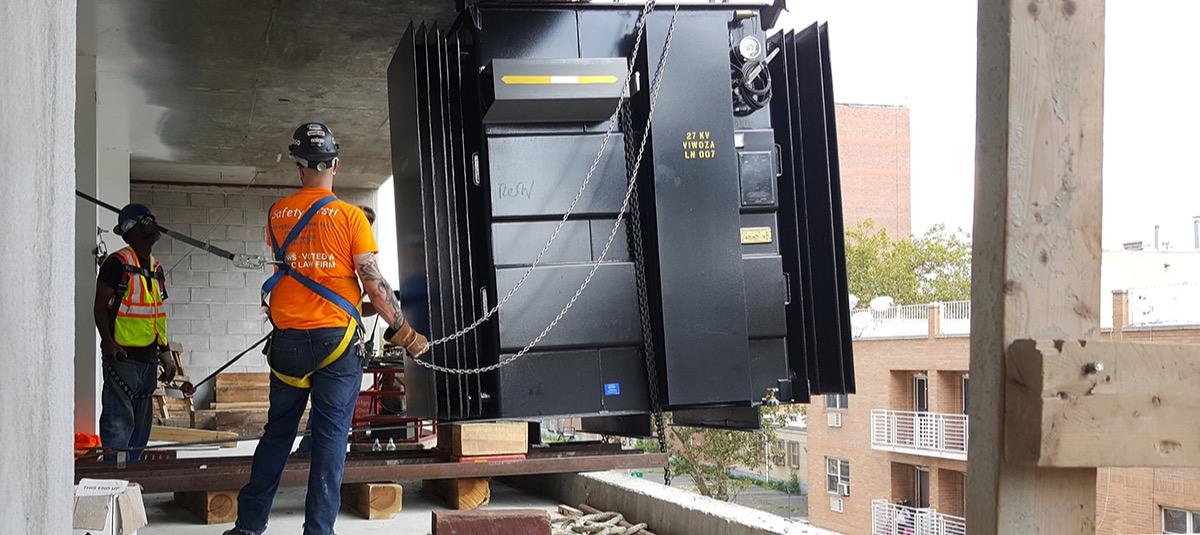
The utility supplies and owns the transformers and protectors, but the customer builds the room they live in, to the utility's specification. For interior vaults that is specialized, intensive work.
- Structural openings, gratings, hatches and ventilation sized to the utility's spec
- Steel supports fabricated to tight tolerances
- Aluminum bus welded in place
- Grounding, sump and drainage details
- Coordination of inspections and acceptance with the utility
Pricing a vault without utility drawings
During bidding, the utility often has not issued its drawings for the vault. You see the space, not the bus, the steel or the ventilation. There are three common ways to handle it.
| Approach | Risk | When it works |
|---|---|---|
| Exclude the vault | You may look incomplete next to bidders who carried it | When the GC has asked for it as a separate price |
| Carry an allowance | Allowances get cut, and the real number can blow through them | Early budgeting only |
| Get budget pricing from a vault builder | Lowest, if the builder has done many vaults | Most hard bids with network service |
D&M has built hundreds of vaults over the last 20 years and can give budget pricing on a network vault before the utility drawings are issued. If your bid set shows a vault, send it over early.
Related capability
Vault Construction
Isolated and spot network vaults built turnkey with our own forces, with budget pricing before utility drawings exist.